AM4 vs AM5 in 2026: Which Socket Should You Actually Build On?

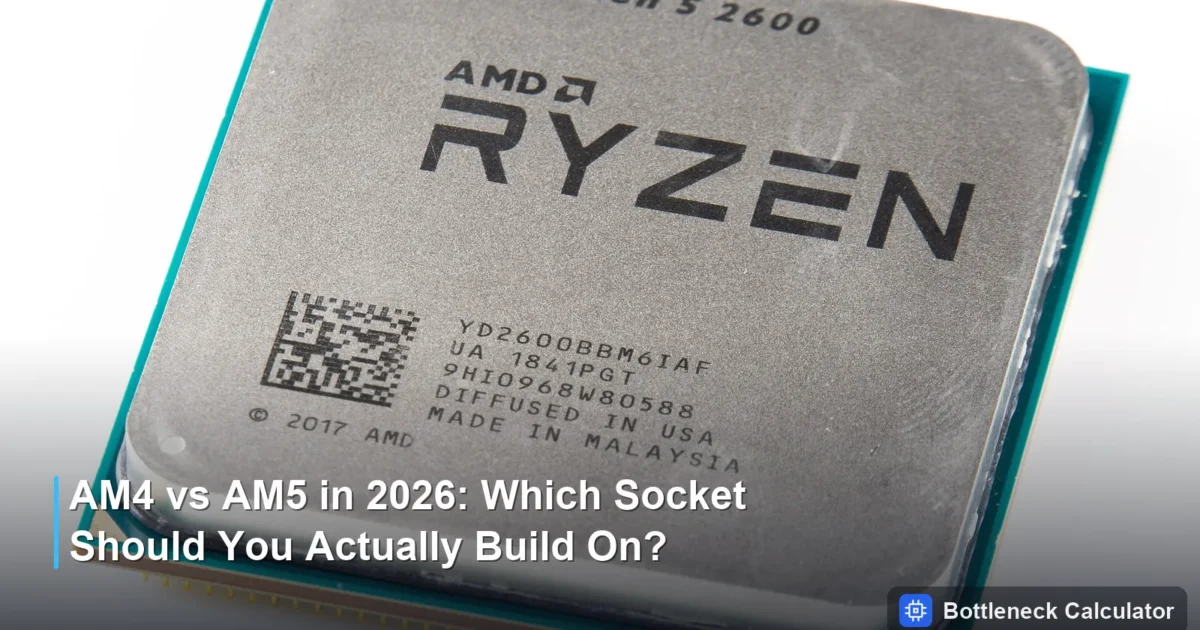
The AM4 vs AM5 question is really two questions wearing one coat, and people keep answering the wrong one.
Question one is which socket is better. That is easy. AM5 is better. It is newer, it takes DDR5, it has PCIe 5.0, and AMD has promised support on it into 2027 and beyond.
Question two is which socket you should buy. That is not easy at all, and the answer for a large number of people is still AM4.
The gap between those two answers is where the money lives.
The short version
If you already own an AM4 motherboard, the upgrade that makes sense is almost always another AM4 chip. A Ryzen 5700X3D or 5800X3D drops into a board you already have, needs no new memory, and keeps your cooler.
If you are building from nothing in 2026, build AM5. Paying the platform tax once is better than paying it later.
If you own an AM5 board already, this article is not for you. Buy the fastest chip your budget allows and stop reading.
That is the whole decision. The rest of this explains why, and covers the three details that trip people up: cooler mounting, memory, and how much life AM4 actually has left.
What actually changed between the sockets
AM4 launched in 2017 and ran until 2026. Nine years on one socket is almost unheard of. AM5 arrived in 2022 and is the current platform.
| Feature | AM4 | AM5 |
|---|---|---|
| Pin design | PGA, pins on the processor | LGA, pins in the socket |
| Pin count | 1331 | 1718 |
| Memory | DDR4 only | DDR5 only |
| PCIe | 4.0 on most boards | 5.0 |
| Cooler mounting | 54mm hole spacing | 54mm hole spacing |
| Top gaming chip | Ryzen 7 5800X3D | Ryzen 7 9800X3D |
| Support window | Ended, final chips released 2026 | Committed into 2027 and later |
| Typical board cost | 70 to 140 dollars | 150 to 300 dollars |
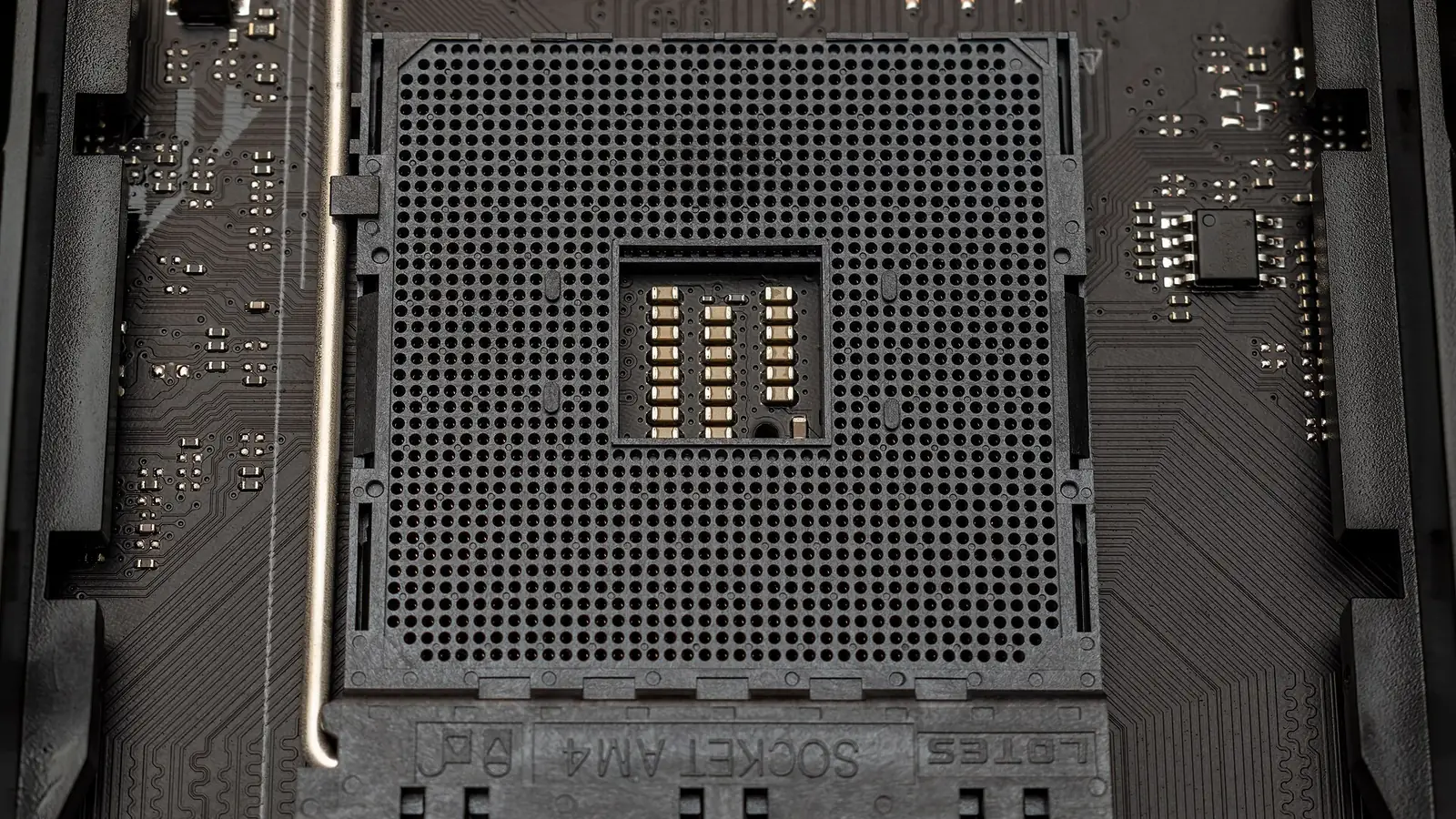
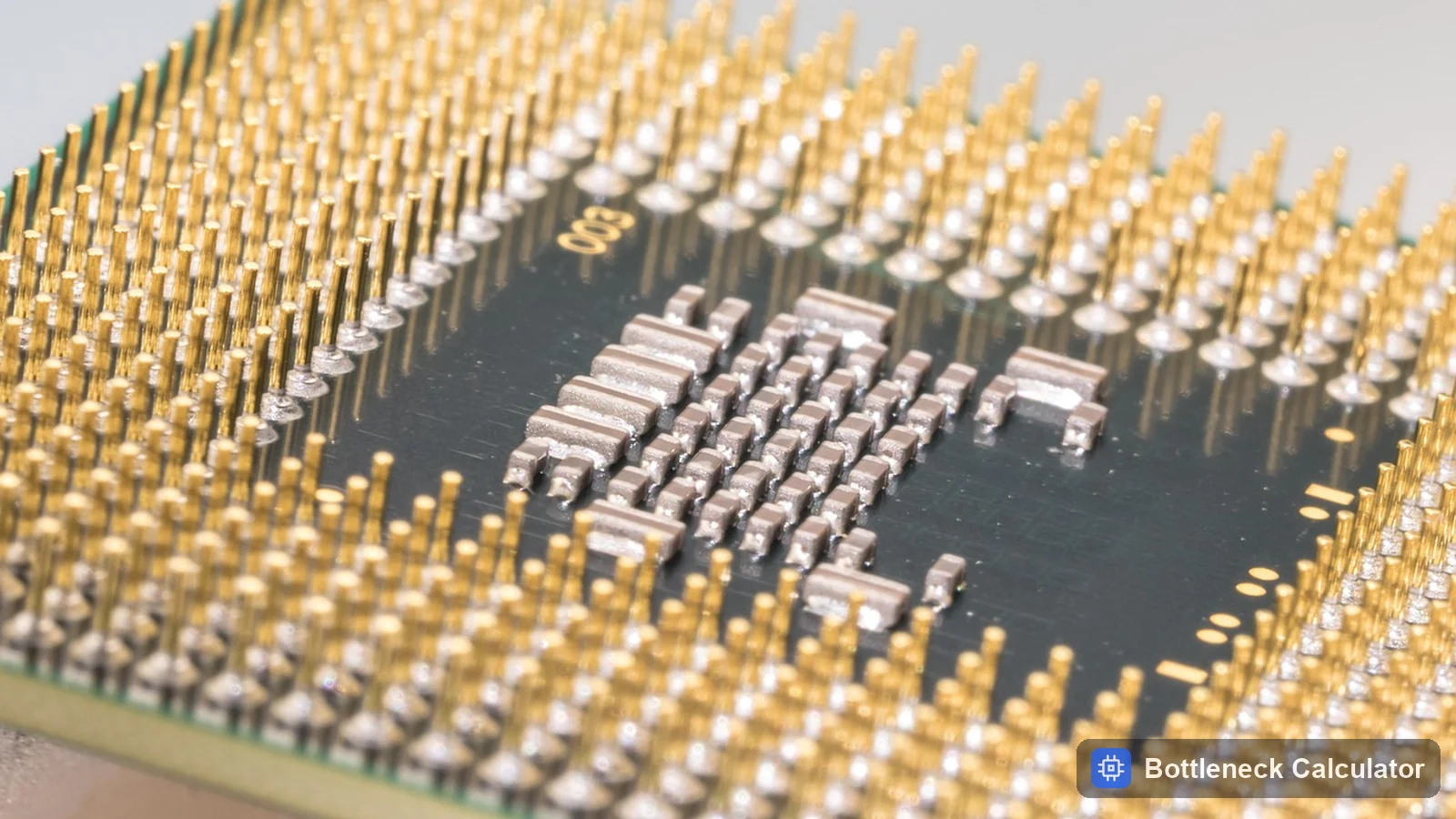
The pin change matters when you handle the parts. On AM4 the fragile pins are on the chip, so a dropped processor is a dead processor. On AM5 the pins are in the socket, so a dropped processor is usually fine and a careless screwdriver is what kills the board.
The memory change is the expensive one. AM5 does not accept DDR4 at all. There is no compatibility mode and no adapter. If you move to AM5 you are buying memory, and our breakdown of DDR4 against DDR5 in real games explains what that money actually buys you, which is less than the spec sheet implies.
The cooler question, because it comes up constantly
Your AM4 cooler fits AM5. The mounting holes are 54mm apart on both sockets, which was a deliberate choice by AMD.
There are two caveats and they are small.
Some all in one liquid coolers shipped with a bracket that clips to the plastic retention frame on AM4 boards. AM5 boards have a different frame. Those coolers need the AM5 bracket, which most manufacturers send free if you ask.
AM5 processors are slightly taller at the heat spreader. Contact is fine, but if your cooler was already marginal on AM4 it will be marginal on AM5 too. Our guide to choosing between air and liquid cooling covers what actually matters there, and for the current flagship specifically we have a 9800X3D cooler guide.
Nothing else transfers. Not the memory, not the board, not the chip.
What the upgrade actually costs
This is the table that decides it. Prices are United States street prices in November 2026.
| Path | Processor | Board | Memory | Total |
|---|---|---|---|---|
| Stay on AM4, mid upgrade | 5700X3D, about 190 | reuse | reuse | about 190 |
| Stay on AM4, top upgrade | 5800X3D, about 230 | reuse | reuse | about 230 |
| Move to AM5, entry | 7600, about 180 | B650, about 140 | 32GB DDR5, about 95 | about 415 |
| Move to AM5, gaming | 7800X3D, about 330 | B650, about 140 | 32GB DDR5, about 95 | about 565 |
| Move to AM5, top | 9800X3D, about 460 | X870, about 220 | 32GB DDR5, about 110 | about 790 |
The AM4 column is one purchase. The AM5 column is three. That is the entire argument, and it is why the best AM4 processors are still selling in 2026.
A 5700X3D at 190 dollars gets you roughly 85 percent of a 7800X3D in games. The remaining 15 percent costs 375 dollars more. If you are gaming at 1440p or 4K, you will not see most of that 15 percent anyway, because the graphics card is doing the limiting.
When AM5 is obviously right
Three cases, and they are clear.
**You are building a new machine from scratch.** There is no board to reuse, so the platform tax is unavoidable either way. Pay it on the current socket.
**You pair with a top end graphics card.** At 1080p with an RTX 5080 or 5090 the processor genuinely limits frame rate, and the X3D chips on AM5 pull ahead. Our pages on the best processor for an RTX 5080 and the best processor for an RTX 5090 go through the numbers. If you are unsure whether your parts are mismatched, the bottleneck calculator will tell you before you spend anything.
**You want an upgrade path.** AM4 is finished. Whatever you buy on it today is the last processor that board will ever see. AM5 has at least one more generation coming.
When AM4 is obviously right
Also three cases.
**You own a working AM4 board with a B450, B550 or X570 chipset.** Check the support list and flash the BIOS. A 5700X3D is a large jump from anything in the 2000 or 3000 series.
**You play at 1440p or 4K.** At those resolutions the graphics card is the limit in nearly every game. A faster processor changes very little. Spending the 375 dollar difference on a better card changes a lot, which our guide to the best graphics card for 1440p gets into.
**Your budget is under 400 dollars total.** AM5 cannot be done well for that. AM4 can be done very well.
The 3D V-Cache thing, briefly
Both sockets have chips with stacked cache. On AM4 that is the 5700X3D and 5800X3D. On AM5 it is the 7800X3D and 9800X3D.
This technology is the reason an older AM4 chip keeps up at all. Games care more about cache than clock speed, and the X3D parts carry roughly three times the L3 of a normal chip. We explain the mechanism in our piece on 3D V-Cache, including which game genres gain the most.
The practical point for the AM4 vs AM5 decision is this. A 5800X3D from 2022 still beats plenty of newer non X3D processors in games. That is not normal, and it is why the old socket refuses to die.
Memory, where the AM5 cost hides
AM5 is DDR5 only. Budget 95 to 130 dollars for a sensible 32GB kit.
Do not buy the cheapest kit on the shelf. AM5 is sensitive to memory speed and timings in a way AM4 is not, because of how the chips talk to the memory controller. The sweet spot is DDR5 6000 at CL30. Faster kits cost more and often run slower in practice because the controller has to drop to a lower ratio.
Our memory buying guide covers the configuration rules, and the short version is that two sticks beat four and that enabling the profile in BIOS matters more than the number on the box. AMD documents the supported speeds on its Ryzen desktop processor pages.
If you want a specific kit, a 32GB DDR5 6000 CL30 kit is the safe default on AM5, and a 32GB DDR4 3600 CL16 kit is the equivalent on AM4.
How much life does AM4 have left?
As a platform, none. AMD released its final AM4 processors and the socket is closed.
As a machine, years. A 5700X3D paired with a mid range card will play everything released in 2026 at good frame rates, and will keep doing so for a while. Platform death and usefulness death are not the same event, and people confuse them constantly.
The honest framing is this. Buying AM4 in 2026 means buying a known quantity with no future upgrades, cheaply. Buying AM5 means paying more now for the option to upgrade later. Whether that option is worth 375 dollars depends on whether you actually take it, and most people do not.
Will moving to AM5 fix a slow machine?
Only if the processor is what is slow.
This is worth checking before you spend anything. A great many people buy a faster chip when the graphics card was the limit, and see almost no change. Our guide to telling a processor limit from a graphics limit takes about 30 seconds to run through, and fixing a processor bottleneck lists several things to try that cost nothing at all.
If you are not sure what your machine is capable of in the first place, start with this five minute check.
Power and heat
AM5 chips run hotter at the surface. The 7000 series in particular will sit at 95 degrees under load and that is by design, not a fault. AMD lets them run to the thermal limit and clock accordingly.
This alarms people who are used to AM4 numbers. It should not. Our page on what processor temperatures are actually normal explains the difference.
Power draw is similar between the two platforms for equivalent performance tiers. If you are sizing a supply, our guide to how many watts a PC actually uses has measured figures rather than the inflated ones manufacturers quote. The processor coverage at Tom’s Hardware is a reasonable second source for launch power figures.
The decision in one table
| Your situation | Buy |
|---|---|
| Own a B450, B550 or X570 board | AM4, a 5700X3D or 5800X3D |
| Building new, any budget above 700 dollars | AM5 |
| Building new, budget under 400 dollars | AM4 |
| Gaming at 1440p or 4K on a mid range card | AM4 if you own the board |
| Gaming at 1080p with a 5080 or 5090 | AM5 |
| Want to upgrade again in two years | AM5 |
| Want this to be the last upgrade | AM4 is fine |
Motherboards, and the BIOS trap
If you are staying on AM4, one thing can ruin the plan. Older boards shipped with a BIOS that does not recognise 5000 series chips at all. The board will not post, and you cannot flash the update without a working processor already installed.
Boards with a BIOS Flashback button solve this. You put the file on a USB stick, press the button with no processor fitted at all, and wait. If your board does not have that button, you need to borrow an older chip to do the update first.
Check three things before you buy, in this order. The exact board model, not the chipset family. The current BIOS version printed during boot. The manufacturer support list for that model.
On AM5 this problem is smaller but not gone. A board made for 7000 series chips usually needs an update before a 9000 series chip will run in it, and the same Flashback rule applies. Our motherboard guide for the 9800X3D covers which boards ship ready and which do not.
Images: blickpixel via Pixabay, plus Fritzchens Fritz (CC0), Razor512 (CC BY 2.0) and Brian Wong (CC BY-SA 2.0) via Wikimedia Commons.
AM4 vs AM5 questions people actually ask
Is AM4 dead in 2026?
As a platform, yes. AMD has released its final AM4 processors and no new chips are coming. As a machine it is far from dead. A 5700X3D will play current games at high frame rates for years.
Will my AM4 cooler fit an AM5 motherboard?
Yes. Both sockets use 54mm mounting hole spacing, which AMD kept deliberately. The exception is some liquid coolers that clipped to the AM4 plastic retention frame, and those need an AM5 bracket that most manufacturers supply free.
Can I use DDR4 memory on AM5?
No. AM5 is DDR5 only. There is no compatibility mode, no adapter and no board that takes both. Moving to AM5 means buying memory, and that is a real part of the cost.
Is the 5800X3D still worth buying?
If you already own an AM4 board, it is one of the best value upgrades available. It gets you close to AM5 gaming performance for the price of the chip alone. If you do not own the board, build AM5 instead.
How much faster is AM5 than AM4 in games?
Comparing the best of each, a 9800X3D is roughly 25 to 35 percent faster than a 5800X3D at 1080p. At 1440p the gap narrows to around 10 to 15 percent, and at 4K it often disappears because the graphics card becomes the limit.
Do I need a new power supply for AM5?
Usually not. Power draw for equivalent performance tiers is similar between the platforms. Check the connector requirements of your graphics card rather than the processor, since that is where the demand has grown.
Is AM5 worth it at 1440p?
If you are building new, yes, because you are paying for the board and memory anyway. If you already own an AM4 board, the upgrade rarely pays for itself at 1440p, because the graphics card is doing most of the limiting.
What is the difference between the AM4 and AM5 socket physically?
AM4 is PGA with 1331 pins on the processor. AM5 is LGA with 1718 pins in the socket. They are not interchangeable in either direction, and no adapter exists.
Should I buy AM5 now or wait?
AM5 has at least one more processor generation committed, so buying now still leaves an upgrade path. Waiting for the next generation mostly makes sense if you can live with your current machine for another year.
Which AM4 motherboards support the 5700X3D?
Most B450, B550 and X570 boards do with a BIOS update, and many A520 boards as well. Check your manufacturer support list by exact board model before buying, because older boards may need the update flashed with a different chip installed.
Related reading
Best Intel CPU for Gaming in 2026 (An Honest Case)
Let me start where most Intel buying guides will not. AMD currently holds the gaming performance crown, and has since the X3D parts arrived. Any guide that pretends…
Read more about Best Intel CPU for Gaming in 2026 (An Honest Case)
Best CPU Coolers 2026: Air vs Liquid, Honestly
Cooler marketing is built around a number that does not mean much. A 360mm radiator sounds twice as capable as a 180mm one, and a tower cooler with…
Read more about Best CPU Coolers 2026: Air vs Liquid, Honestly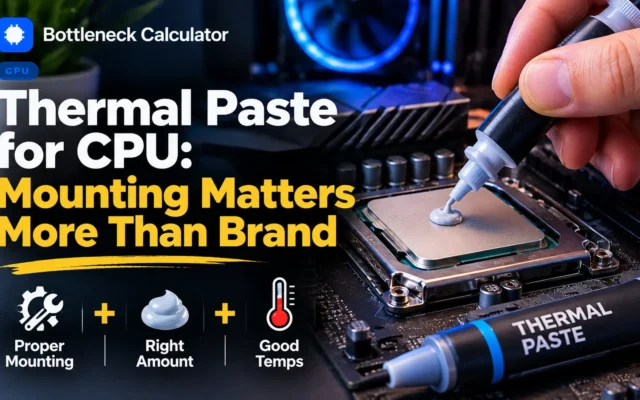
Thermal Paste for CPU: Mounting Matters More Than Brand
CPU thermal paste is the cheapest component in your machine and the one most likely to be applied wrongly, re-applied unnecessarily, or blamed for problems it did not…
Read more about Thermal Paste for CPU: Mounting Matters More Than Brand